 Dog Sledding Breckenridge
Breckenridge in Summer: What It Is Really Like
Last reviewed 2026-09-08
Breckenridge in summer is the cheaper, quieter, greener half of the year, and most people who only know it as a ski town are surprised by how much of it works better without snow. The gondola is free, the trails start from Main Street, and the same kennels that run sled teams in February are out on wheeled carts at seven in the morning. Two things shape every summer day here: the altitude, which is 9,600 feet whether you feel it or not, and the storms, which arrive at lunchtime.
Quick answer Season dates, what is free, and the two things that shape every day
Summer here runs roughly mid-June to early September: the resort's Epic Discovery season is June 12 to September 7, and the BreckConnect gondola that carries you from town up to Peak 8 is free the whole time. July is the warmest month at a mean of about 12.9 C, which means warm afternoons and nights near freezing — this is 9,600 feet, not a beach. The two rules that matter are altitude and weather: expect broken sleep for the first night or two, and plan to be off exposed ridgelines by noon, when the afternoon thunderstorms build.
Key takeaways
- Season: Epic Discovery June 12 to September 7, closed August 31 to September 3. What is open
- The gondola is free and so are the trails; the alpine coaster and slide are not. What costs money
- Warmest month is July at about 12.9 C mean — and it can snow in June. Month by month
- Sled teams still run in summer, on wheeled carts at dawn. How that works
- Storms build after midday almost every summer afternoon. The noon rule
What Breckenridge Is Like Once the Snow Goes
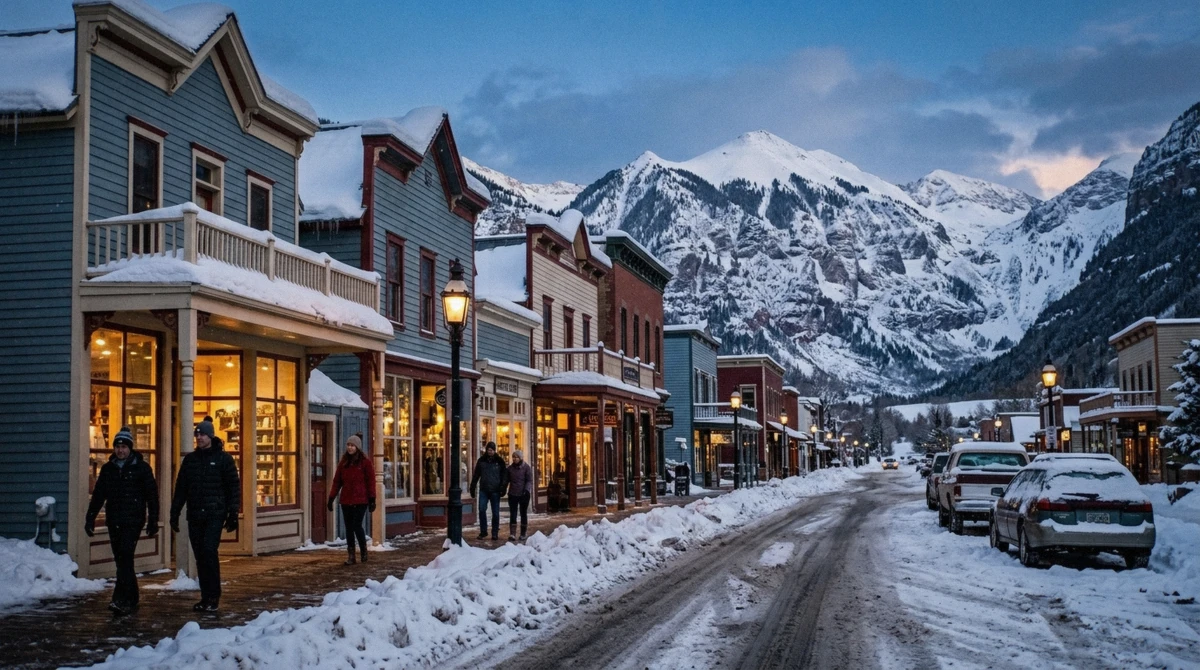
A Victorian mining town at 9,600 feet with a mountain attached, and about a third of the winter crowd.
The shape of the town does not change with the season — the same painted storefronts on Main Street, the same Blue River running behind them — but almost everything about the experience does. Lift queues become empty trailheads. Ski shops turn into bike shops. Rooms that cost $500 a night at New Year go for a fraction of it in July.
What replaces the skiing is a trail network that starts in town rather than at a car park. The paved Blue River recreation path runs down the valley to Frisco, entirely car-free, which makes a bike genuinely useful here rather than an ornament. Above town, hiking trails climb into the Tenmile Range through wildflower meadows that peak in mid-July, and the free gondola lifts you 800 feet of that climb if you would rather start higher.
The part that catches visitors out is that this is still high alpine country in summer. Nights drop to near freezing in every month. Snow falls somewhere on the range in June and September in most years. And the sun at 9,600 feet burns in a way that Denver's does not.
Epic Discovery's summer season at the resort
BreckConnect, town to Peak 8, all summer
Warmest monthly mean; nights near freezing
Town elevation — the altitude does not take the summer off
Be off exposed ridgelines before the storms build
How the kennels run between snow seasons
Breckenridge Summer, Month by Month
Monthly mean temperatures for the Breckenridge grid cell from the [ERA5 reanalysis](https://cds.climate.copernicus.eu/), averaged over 2015 to 2024. Read them as means, not highs: a 12.9 °C July mean is a warm afternoon and a cold night in the same 24 hours.
Snow is not confined to winter here: the same decade of data averages about 4 cm of snowfall in June and 5 cm in September. It rarely settles in town, but it closes high trails.
What Is Free, and What Costs Money
A surprising amount of the best of a Breckenridge summer costs nothing, which is not true of the winter.
The free half
The BreckConnect gondola is free to ride, all summer, in both directions. It runs from the edge of town up to the Peak 8 base area, takes bikes and dogs, and operates roughly 8:30 am to 4:30 pm in high season. That alone removes the single biggest barrier to hiking here — the first 800 feet of climb.
The FreeRide buses and the Main Street trolley are free, so a car stays parked. The hiking trails are free and start from town or from the top of the gondola. The Blue River recreation path is free, paved and car-free to Frisco. Fishing the Blue needs a Colorado licence, but the water is public.
What that adds up to is a rare thing in an American ski town: you can have a full, good day here for the price of lunch.
What you pay for
The resort's paid summer attractions sit at Peak 8 under the Epic Discovery banner — the alpine coaster, the alpine slide, a ropes course and zip lines — sold as an Adventure Pass or an Explorer Pass rather than per ride. Prices move by season and are worth checking on the day rather than trusting a number in a blog.
Bike rental runs around $19 to $85 a day depending on whether you want a gravel bike, a mountain bike or an e-bike, and the e-bike is the one worth the money here — at 9,600 feet the motor is the difference between riding to Frisco and pushing back from it.
Guided activities — a fat-bike tour with a distillery stop, a scenic hike, rock climbing, a ghost walk after dark — run $20 to $270. And the sled kennels sell a cart ride and kennel tour, usually cheaper than the winter sled version.
The Resort's Summer Side: Epic Discovery
Peak 8 turns into an adventure park for eleven weeks, and the calendar has one gap in it that trips people up.
Season, hours and the closure nobody expects
The summer season runs June 12 to September 7. Epic Discovery activities operate roughly 9 am to 4 pm, and the gondola 8:30 am to 4:30 pm, with the last ride up at 4 pm.
The trap is the end of the season: summer activities, the gondola included, close from August 31 to September 3, reopen on September 4, and shut for good on September 7. Arriving in that four-day window with a plan built around the gondola is a bad surprise, and it is not obvious on most third-party pages.
The headline rides are the alpine coaster, 2,500 feet of elevated track through the forest, and the alpine slide, three separate 2,600-foot runs down the mountain. Both are genuinely good, both queue in the middle of the day, and both are better in the first hour after opening.
Booked-Ahead Things to Do
Most of a Breckenridge summer needs no booking at all. These three are the exceptions worth reserving, and all cancel free up to 24 hours before.
 from $85
Best summer half day
from $85
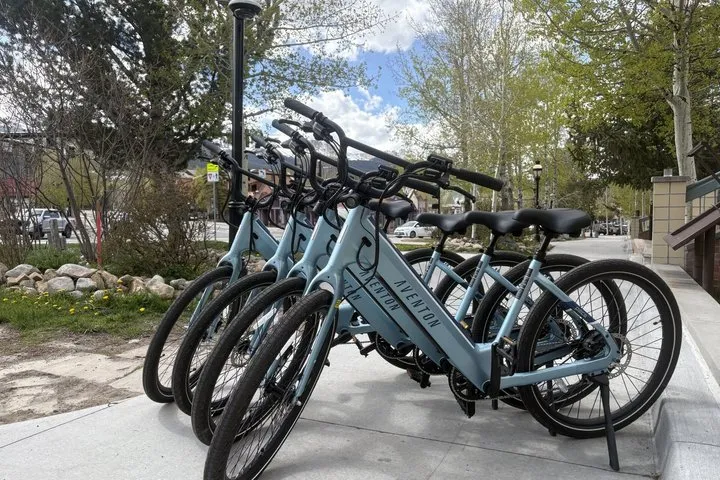
Best summer half day E-Bike Rental: Breckenridge to Frisco on the Blue River Path
Listing details checked in Q3 2026
The single best thing to do here on a summer afternoon without a car: an e-bike on the paved Blue River recreation path, ten downhill-ish miles to Frisco with the motor doing the work on the way back. Helmet, lock, map and a pouch come with it, and you take it for anything from an hour to a full day. At 9,600 feet the assist is not laziness — it is the difference between a ride and a slog.
- Paved car-free path the whole way to Frisco
- Helmet, lock and map included
- Rent by the hour or for the day
- Motor assist makes the altitude a non-issue
 from $85
Guided, with drinks
from $85
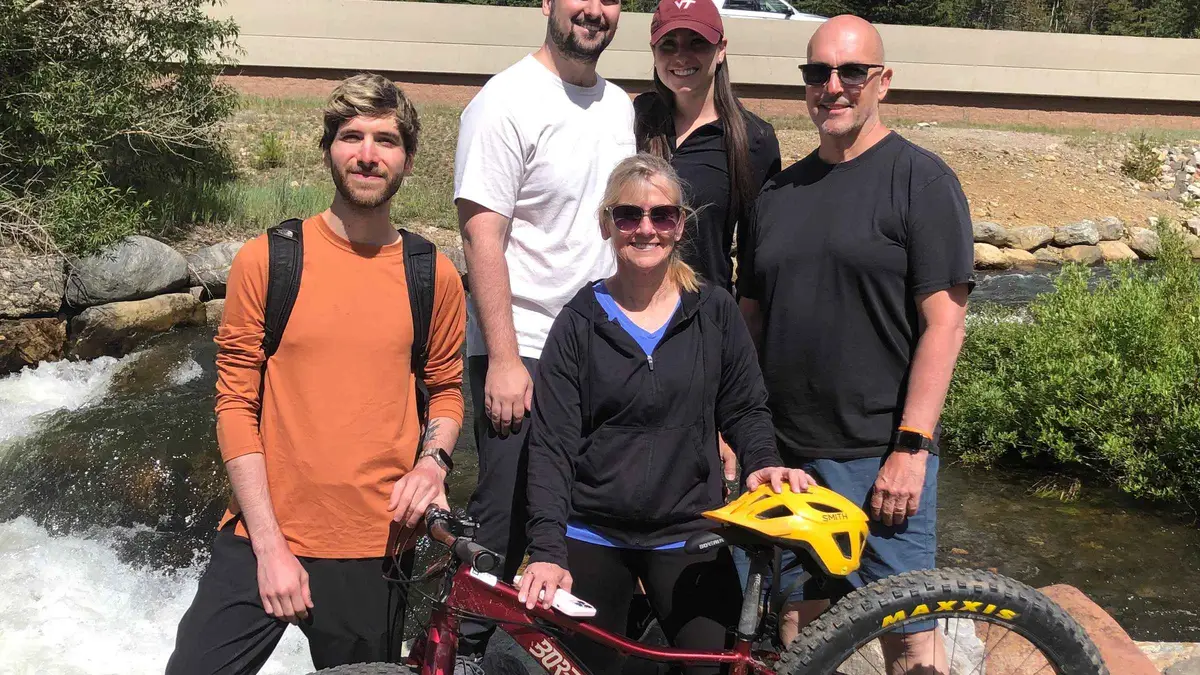
Guided, with drinks Breckenridge Fat Bike, Beer and Distillery Tour
Listing details checked in Q3 2026
Two and a half hours on a fat bike with a guide, threaded between a brewery and a distillery — the town's own drinking history is the actual subject, and the bike is how you get between the stops. Runs in summer on dirt and in winter on packed snow, which is what fat tyres are for. Free cancellation up to 24 hours before, and you can reserve now and pay later.
- Guided loop with a brewery and a distillery stop
- Fat bikes handle summer dirt and winter snow
- Two and a half hours
- Free cancellation up to 24 hours before
 from $35
Cheapest evening out
from $35
Cheapest evening out Breckenridge Ghostly Tales Walking Tour
Listing details checked in Q3 2026
Sled tours finish in the early afternoon, which leaves the evening open. This one walks the mining-era blocks of downtown after dark, ghost-hunting gear handed out at the start, meeting at the dredge boat. It runs entirely outdoors, so it is a second night in ski clothes rather than an excuse to change — and at $35 it is the cheapest thing on this page. Wheelchair accessible, prams welcome, an adult must book.
- Runs entirely outdoors through downtown Breckenridge
- Ghost-hunting equipment provided
- Wheelchair accessible route
- Free cancellation up to 24 hours before
Dog Sledding in Summer: Carts, Not Sleds
Yes, it runs. No, there is no snow. It is a different morning from the winter version, and better than it sounds.
How the kennels work between snow seasons
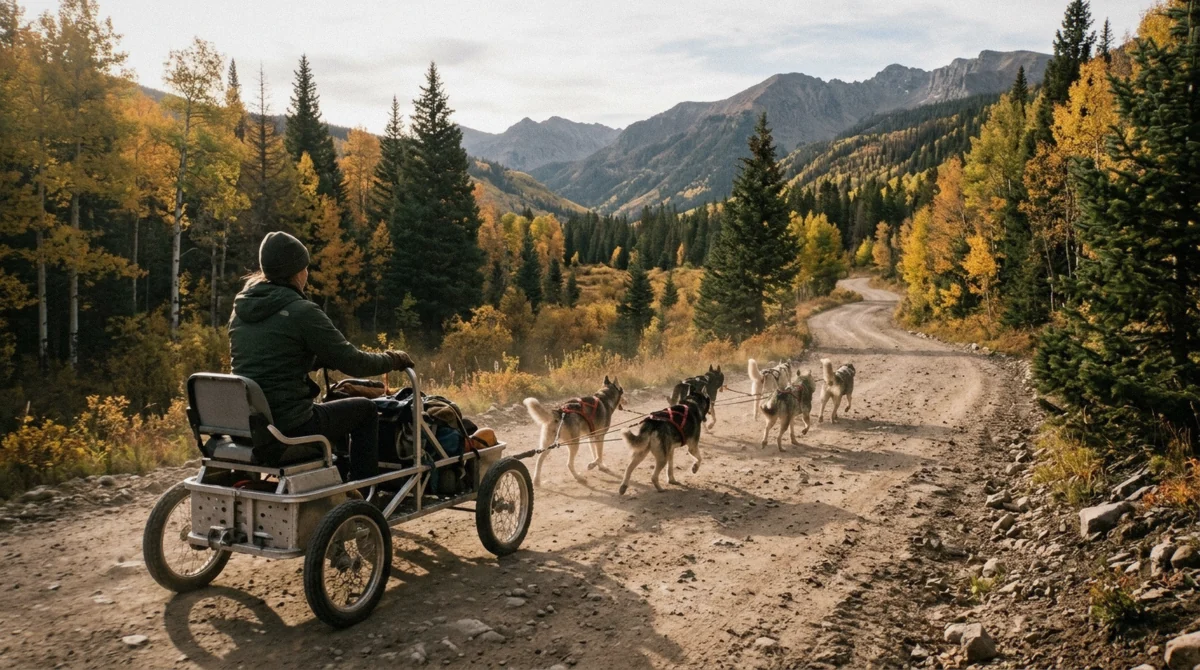
Sled teams are working animals that need to run all year, so through summer and autumn the kennels here swap runners for wheeled training carts and take guests along on dirt forest roads. You get the same dogs, the same noise at the start line, and a much better look at how a kennel actually operates, because nobody is in a hurry to get a sled onto snow.
The constraint is heat rather than snow. Cart runs go early — often starting around seven in the morning — and get cancelled outright when the day warms up, because a working husky in a harness overheats long before a person does. A responsible operation cancels rather than runs a warm team, and that is the answer you want to hear when you call.
What you do not get is the thing the photographs sold you: silence, snow, and an empty white valley. If the sled ride is the reason for the trip, come in winter — the full guide to how the sled tours run covers the season, the cost and the format. If you are here in July with children who love dogs, the cart ride and the kennel visit is a genuinely good morning, and usually the cheaper ticket.
Altitude, and Why You Cannot Sleep
The most-asked question about Breckenridge is not about the trails. It is why nobody sleeps properly on the first night.
What happens at 9,600 feet
Breckenridge sits at 9,600 feet, roughly 4,300 feet above Denver. At that elevation the air holds about a third less oxygen than at sea level, and the body responds by breathing faster and more shallowly — including while you are asleep. The result is a broken first night or two: waking repeatedly, sometimes with the sensation of not having breathed, plus a headache and vivid, fragmented dreams. It is common, it is not dangerous in itself, and it settles as you acclimatise — the honest answer to how bad the altitude is for sleeping is: bad for one or two nights, then fine.
What helps: arrive and take the first day gently rather than booking the hardest hike for the morning after you land. Drink far more water than feels necessary. Go easy on alcohol for the first evening — a drink at this elevation does the work of two. Caffeine late in the day is worse here than at home.
What to watch for is the line between discomfort and altitude sickness: shortness of breath at rest, confusion, repeated vomiting or a headache that will not shift are reasons to go down rather than to rest up high. Losing 3,000 feet on the highway toward Denver fixes most of it, and that is a 40-minute drive.
Afternoon Storms, and the Noon Rule
Colorado's summer weather runs to a timetable, and the timetable is why local hikers start early.
Why everything starts at dawn here
Through July and August the high country builds thunderstorms in the afternoon almost daily: clear morning, cloud stacking up by late morning, lightning and rain from roughly midday onward. It is a mountain convection pattern rather than a front, so a beautiful 9 am sky tells you nothing about 2 pm.
The working rule that every local guide repeats is to be off summits, ridgelines and exposed alpine trails by noon. Above treeline in a lightning storm there is nowhere to go, and the Tenmile Range crest is a long way from cover.
That is why the sled kennels run cart tours at seven in the morning, why hikers here start at dawn, and why an afternoon in Breckenridge is best spent on Main Street, in the trees, or on the valley bike path rather than up high. Plan your day in that order and the weather stops being a problem.
What to Pack for a Summer Trip
Short list, and it is not the one people pack for a mountain summer.
Six things the altitude and the storms decide for you
Warm afternoons and near-freezing nights in the same day, sun that burns fast at 9,600 feet, and a thunderstorm most afternoons. That combination, rather than the temperature, is what to pack against.
| Item | Why here specifically | What we link to |
|---|---|---|
| Packable rain shell | The storms build after midday almost daily and pass quickly | lightweight packable rain jacket |
| Warm mid-layer | Nights sit near freezing in every summer month | Whatever you already own |
| High-SPF sunscreen | Thin air and high sun burn faster than at sea level | mineral SPF 50 stick |
| Insulated water bottle | Altitude dehydrates you faster, and it helps with the headache | vacuum insulated bottle |
| Small daypack | Trails start in town, so you carry the layers all day | 20L hiking daypack |
| Trekking poles | The descents here are long and rocky | collapsible trekking poles |
Where to Stay, and What It Costs in Summer
The one part of a Breckenridge trip where summer is dramatically cheaper than winter.
Same rooms, a different price
The lodging that commands $221 to $593 a night in mid-January — the full comparison sits on the main guide — is a different market in July. The same ski-in properties at Peak 8 have no lift to be in for, and the town-centre hotels compete on price rather than on availability.
For a summer trip the calculation flips: stay in the town centre rather than up at the resort. Everything worth walking to is on or near Main Street, the free gondola takes you up the mountain when you want it, and the paved path to Frisco starts from the valley floor.
The two weeks to book early anyway are the Fourth of July and the last week of August, when the town fills — and flights into Denver price up for the same fortnights. Everything else in summer can be booked close in. Compare current Breckenridge rates.
A car is less necessary here in summer than in winter — the gondola and the free buses cover the town — but the trailheads outside it still need one. Rentals from Denver airport are cheaper than picking up in the mountains.
Breckenridge in Summer: Common Questions
Is it worth going to Breckenridge in the summer?
For hiking, biking and a mountain town without ski-season prices, yes — and the free gondola plus trails that start in town make it unusually easy to have a good day for nothing. What you should not expect is beach weather: July's mean is about 12.9 °C, nights sit near freezing, and it can snow on the range in June. What the season is actually like.
Is there anything to do in Breckenridge, Colorado in the summer?
More than in winter, arguably. Free: the BreckConnect gondola, the hiking trails from town, the paved Blue River path to Frisco, the FreeRide buses. Paid: the alpine coaster and slide at Epic Discovery, bike and e-bike rental, guided rides and hikes, and the sled kennels' summer cart tours. The free and paid split.
Why can't I sleep in Breckenridge?
Altitude. At 9,600 feet there is roughly a third less oxygen than at sea level, and your breathing pattern changes while you sleep — which produces repeated waking, headaches and vivid dreams on the first nights. It is normal and it settles in a day or two. Water, an easy first day and no alcohol on arrival all help. What to expect and when to worry.
Is Aspen or Breckenridge better in summer?
Different trips. Aspen is the more polished, more expensive town with bigger alpine terrain around it — the Maroon Bells and the Elk Range. Breckenridge is cheaper, more compact and easier to reach: 104 miles from Denver on one interstate against a four-hour drive over two passes. For a short trip from Denver, Breckenridge wins on access; for a week of high alpine hiking with a bigger budget, Aspen has more range.
When does Breckenridge open for summer?
The resort's Epic Discovery season runs June 12 to September 7. The catch at the end: activities and the gondola close August 31 to September 3, reopen September 4, and finish for the season on September 7. The town, the trails and the shops run all year regardless. Season and hours.
Can you go dog sledding in Breckenridge in summer?
On wheels, yes. The kennels run the same teams on wheeled training carts along dirt roads, usually starting around seven in the morning and cancelling when the day warms up, because a working team overheats before the people do. It is a good kennel visit and a poor substitute for the snow version — the winter guide explains the difference.
What should I pack for Breckenridge in summer?
Layers and sun protection, in that order. Afternoons are warm, nights sit near freezing in every summer month, and the sun at 9,600 feet burns fast. Add a waterproof shell for the afternoon storms, which arrive most days from around midday, and shoes you can walk a rocky trail in.