 Dog Sledding Breckenridge
Denver to Breckenridge: Every Way to Make the Trip
Last reviewed 2026-09-08
Denver to Breckenridge is 104 miles and, in clear conditions, an hour and forty-five minutes to two hours on I-70. That is the easy part. The decisions that actually matter are whether you want a car at the other end, whether you are willing to drive a mountain interstate in a storm, and how much the difference between $22 and $161 is worth to you. All five ways are below with the real numbers.
Quick answer The five options, what each costs, and which one suits you
It is 104 miles from Denver International Airport to Breckenridge, about 1 hour 45 minutes to 2 hours when the road is clear and past 3 hours on a peak-season afternoon. A shared airport shuttle is the default and starts around $49 one way. Public transport does the same trip for about $22 — the $10 train into Denver, then a $12 bus over the pass — and takes an hour or so longer. Uber's own estimate for the run is $161. Renting a car costs the most in total but is the only option that leaves you mobile, which matters if anything on your itinerary sits outside town.
Key takeaways
- Cheapest: train plus bus, about $22 — slower, and it does not run to your hotel door
- Easiest: a shared shuttle from $49, door to door for $59 to $129
- Fastest door to door: Uber at about $161, when one will take the fare at all
- Only option that leaves you mobile: your own car — and Colorado's traction rules make the vehicle choice a legal matter, not a comfort one
- No car and only one day? A guided day trip from Denver covers the transport and the sightseeing in one ticket
The Route, and How Long It Really Takes
One road, one tunnel, one exit. The variable is not the route — it is the day of the week and the weather.
104 miles, and the two hours that become three
From the airport you cross the whole Denver metro on E-470 or I-70, then climb west through Clear Creek Canyon, pass Idaho Springs and Georgetown, and cross the Continental Divide at the Eisenhower Tunnel — 11,158 feet, the highest point on the Interstate Highway System. Ten miles later you take the Frisco exit and run south on Highway 9 for the last twenty minutes into Breckenridge.
In clear conditions the drive is an hour forty-five to two hours. Shuttle operators plan for two to two and a half in winter, and that is the honest planning number. On a peak-season Saturday, or behind a crash in the tunnel approach, three hours and more is normal. From downtown Denver rather than the airport it is about 1.5 hours, since you skip the whole eastern crossing of the metro.
The altitude gain is the part nobody prices in: you go from Denver's 5,280 feet to Breckenridge's 9,600 in under two hours, over an 11,158-foot pass. If you have just stepped off a long flight, plan a quiet first evening whatever you travel in.
The two windows to avoid
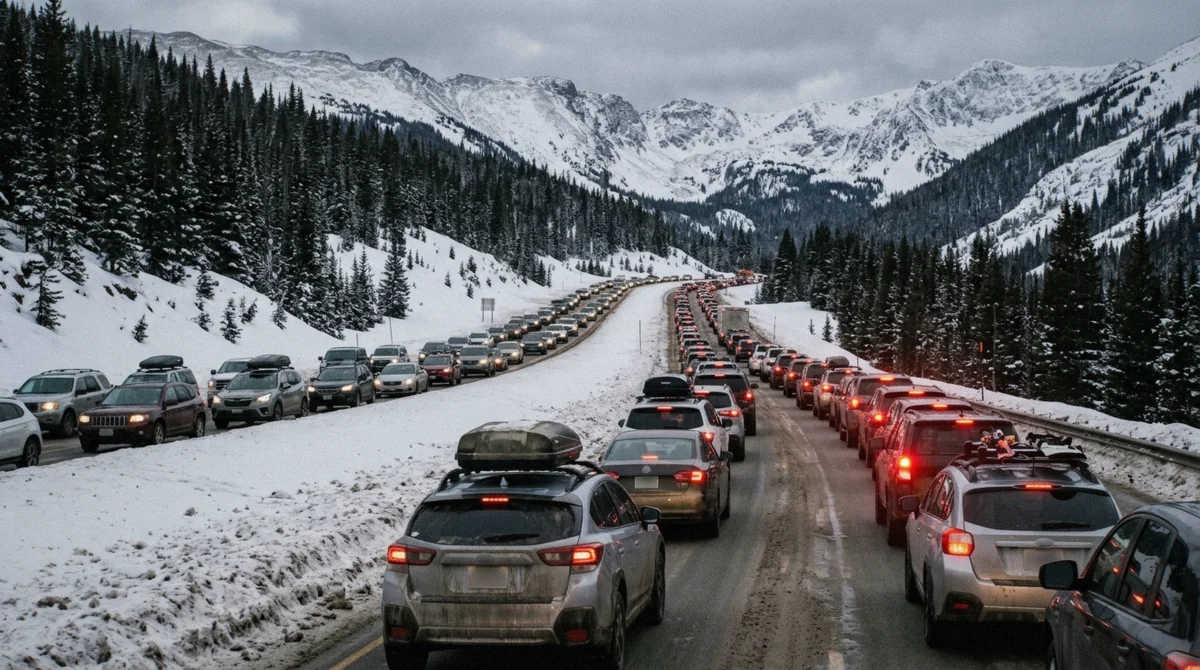
Ski traffic on I-70 is predictable to the hour. Westbound jams from late Friday morning through Saturday morning as the Front Range drives up; eastbound jams Sunday afternoon as it drives home. Travelling against that flow, or midweek, can be the difference between two hours and four.
Check COtrip, the state's own traffic site, rather than a mapping app before you leave — closures, chain restrictions and the tunnel's metering post there first. In a serious storm the Interstate closes outright several times each winter, and no shuttle, bus or rideshare gets through either.
The alternative airport is Eagle County (EGE), an hour closer to Breckenridge but with a fraction of the flights and, usually, a much higher fare. It is worth a price check against Denver for a short trip, not a default.
The Five Ways, Compared
Every fare below is the published one-way adult price, read from the operators' own booking pages and the state transit site.
What each option costs and buys
Prices move with season and demand, and the shuttle range is wide because it covers both a drop at the town transfer centre and a door-to-door run to your lodging. Read the right-hand column first: it is what actually separates these.
| How | One way, per person | Door to door | Time | Best for |
|---|---|---|---|---|
| Shared airport shuttle | From $49 ($39 with an Epic Pass) | $59 to $129 for the door version | 2 to 2.5 h | Most people, most of the time |
| Train plus Bustang bus | About $22 total | No — Frisco, then a free local bus | 3 to 4 h | Budget, light luggage, patience |
| Snowstang direct bus | $12.50 | No — the town transit centre | 1 h 55 m | Weekend arrivals in ski season |
| Uber or Lyft | About $161 (Uber's own estimate) | Yes | About 2 h | Late arrivals and small groups |
| Private transfer | Quoted per vehicle | Yes | About 2 h | Late arrivals, families, four or more with gear |
| Rental car | Rental plus fuel and parking | Yes | 1 h 45 m to 3 h+ | Anyone leaving town during the stay |
The question that actually decides it
Not price — mobility. Breckenridge itself is walkable and its buses are free, so a car sitting in a paid hotel garage for four days is money burnt. But the things people come up here to do outside skiing — a dog sled tour, a trailhead, a hot spring, a restaurant in another town — sit fifteen to forty minutes out, often up roads with no service on them.
So the test is simple: if everything on your list is in town or on the mountain, do not rent. If two or more items are not, rent, and rent something that satisfies the traction law.
Shared Airport Shuttles
The default answer, and for good reason: someone else drives the pass, your gear travels with you, and the price is fixed before you land.
What it costs and how it works
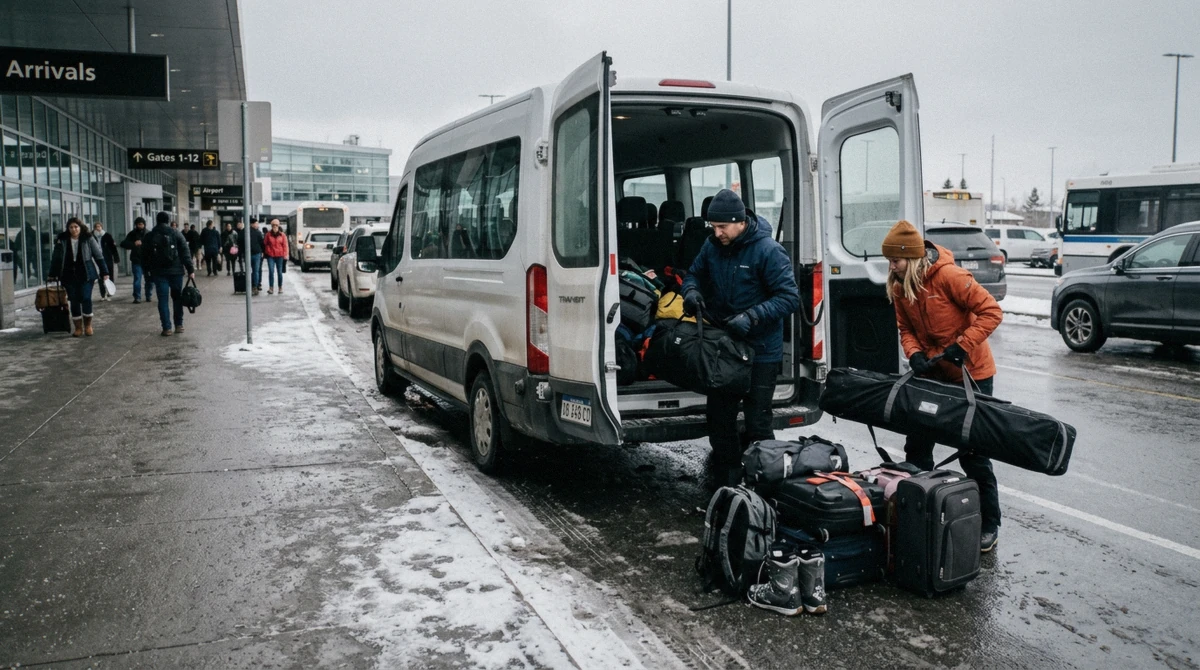
Several companies run the DEN–Summit County corridor: Epic Mountain Express, Peak 1 Express, Summit Express, Fresh Tracks and GoSno among them. The shape of the product is the same across all of them — the split that matters is whether the van drops you in town or at your own door.
Vans are built for the run, with proper luggage bays and ski racks, which is the practical difference from a rideshare car. Fares below are the published one-way adult prices for the shared service.
| Service level | Standard fare | With an Epic Pass | Drops you at |
|---|---|---|---|
| Shared, to town | From $49 | From $39 | The Breckenridge transfer centre |
| Shared, door to door | $59 to $129 | $47 to $103 | Your lodging |
| Private charter | Quoted per vehicle | Epic Mountain Rewards discount applies | Your lodging, no other stops |
When a shuttle is the wrong call
Shared means shared: the van waits for its full manifest and may drop two or three other parties before you. On a bad night that adds an hour to a two-hour trip. If you are four or more people travelling together, price a private charter before you book four shared seats — the arithmetic often flips.
And if your flight lands after the last scheduled departure, do not assume you will improvise. Rideshare drivers are not reliably willing to take a long mountain fare at midnight, and the buses have stopped. That is the one scenario where a night in a Denver airport hotel and a morning departure is genuinely the cheaper answer.
Bus and Train: the $22 Version
Colorado runs real public transport into the mountains, and almost no visitor knows it. It is a third of the price of a shuttle and it works.
The chain from the airport
Three legs, all state-run, all bookable without a car: the RTD A Line train from the airport station to Denver Union Station, the Bustang West Line coach from Union Station over the Divide to the Frisco Transit Center, and the Summit Stage bus from Frisco into Breckenridge. Fares below are read from the state transit site; every Summit County bus is free.
Allow three to four hours end to end, and check that the Bustang connection lines up with your landing time before you commit — the coaches run to a timetable, not to your flight.
| Leg | Adult | Child 2–11 | Senior / disabled | Journey |
|---|---|---|---|---|
| RTD A Line — airport to Union Station | $10.00 | Reduced | Reduced | About 37 minutes, every 15–30 min |
| Bustang West Line — Union Station to Frisco | $12.00 | $6.00 | $9.00 | Over the Divide, timetabled |
| Summit Stage — Frisco to Breckenridge | Free | Free | Free | Local bus, no ticket |
| Total, airport to Breckenridge | About $22 | — | — | 3 to 4 hours end to end |
| Snowstang — Union Station direct to Breckenridge | $12.50 | $6.25 | $9.38 | 06:05 → 08:00, weekends in season |
Snowstang: the direct weekend bus
In ski season the state also runs Snowstang, a direct coach from Denver Union Station to the Breckenridge Transit Center with no changes — faster than most shuttles, and the cheapest single ticket on this page. It calls at the Federal Center and the Wooly Mammoth park-and-ride on the way.
It runs Saturdays and Sundays plus MLK Day and Presidents Day, and the Breckenridge service ends on April 19. Buy the ticket in advance: it guarantees travel on that departure, though not a specific seat, and luggage goes in the bays underneath.
The catch on both bus options is the same — they end at a transit centre, not your hotel. In Breckenridge that matters less than it sounds, because the free FreeRide buses connect the transit centre to almost everywhere anyone stays.
Driving It Yourself
The most flexible option, and the only one where the vehicle you choose is regulated by state law.
Colorado's Traction Law is not advice
Colorado can put the Passenger Vehicle Traction Law in force on any state highway during a storm, and on the I-70 mountain corridor it happens repeatedly through the winter. Under it your vehicle must have all-wheel or four-wheel drive with mud-and-snow, winter or all-weather rated tires and at least 3/16 inch of tread — or chains.
Driving in without that is a $100 fine plus a $33 surcharge. Spin out and block a lane and it becomes $500 plus a $157 surcharge. In a severe storm the state can escalate to the passenger vehicle chain law, under which every vehicle needs chains or an approved traction device regardless of drivetrain.
This is the specific reason a cheap two-wheel-drive rental is a false economy on a winter trip to Summit County — and the reason to confirm the drivetrain in writing rather than trusting the word SUV on a booking page.
Parking, once you arrive
Breckenridge is not a town that rewards bringing a car. Almost all central parking is paid and fills early on a ski day, most lodging charges separately for a space, and the free FreeRide buses and the Main Street trolley cover the town and the base areas all day.
The workable pattern is the one locals recommend: drive up, park the car at your lodging for the duration, and use it only for the trips that actually leave town.
Renting the Car
If the answer is a car, rent it at Denver airport rather than in the mountains, and check three things at the counter.
What to book and what to verify
Book all-wheel or four-wheel drive and get it confirmed in writing — plenty of vehicles listed as SUVs at Denver airport are front-wheel drive crossovers, which do not satisfy the traction law on their own.
At the counter, look at the tires: the law asks for mud-and-snow, winter or all-weather rating and 3/16 inch of tread, and rental fleets are not uniformly compliant. Ask whether chains are permitted under the rental agreement, because many companies forbid them, which quietly makes their two-wheel-drive cars illegal on a chain-law day. And check the ski rack or roof box policy if you are bringing equipment.
Pick up at the airport: rental supply in the mountain towns is thin and expensive in season. Allow extra time on the return leg — eastbound I-70 on a Sunday afternoon in ski season is its own kind of traffic, and missing a flight to save twenty minutes of buffer is the classic Colorado mistake.
What to Keep in the Car
Four things that turn a bad hour on I-70 into an inconvenience. Rentals do not come with any of them.
The winter-drive kit
Closures on this road are measured in hours, not minutes, and they happen with you already on it. An extendable snow brush and ice scraper is the one you will use every single morning — rental cars are handed over clean and are buried by the next storm. A wool blanket and a set of chemical hand warmers live in the boot for the closure you did not plan for, and a full tank before you leave Denver costs nothing and removes the worst version of that scenario.
None of this is dramatic preparation. It is the same list every local keeps behind the seat from November to April.
Going Up as a Day Trip Instead
If Breckenridge is one day of a Denver trip rather than the trip itself, these two do the transport and the sightseeing on one ticket, and both cancel free up to 24 hours before.
 from $138
No car needed
from $138
No car needed From Denver: Breckenridge and Rocky Mountains Guided Tour
Listing details checked in Q3 2026
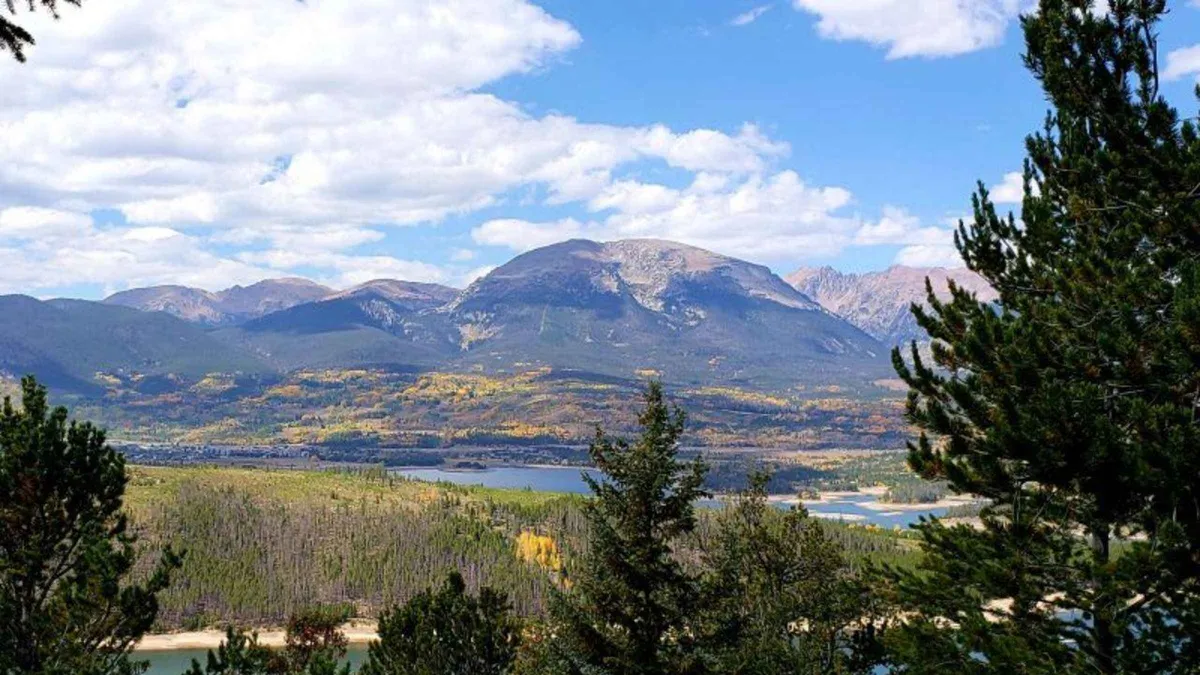
Built for travellers with no car and no snow-driving nerve: a 12-seat van leaves Union Station at 08:15, stops at Red Rocks and Clear Creek Canyon, crosses Loveland Pass and Sapphire Point, then parks you in Breckenridge for two free hours before heading back. It will not get you to a kennel, but it is the cheapest way to see the valley the sled trails run through. Free cancellation up to 24 hours before, and you can reserve now and pay later.
- Departs Denver Union Station at 08:15
- Loveland Pass and Sapphire Point photo stops
- Two free hours in Breckenridge
- Limited to 12 travellers
 from $149.98
Most reviewed
from $149.98
Most reviewed Red Rocks Park, Continental Divide and Breckenridge Day Trip
Listing details checked in Q3 2026
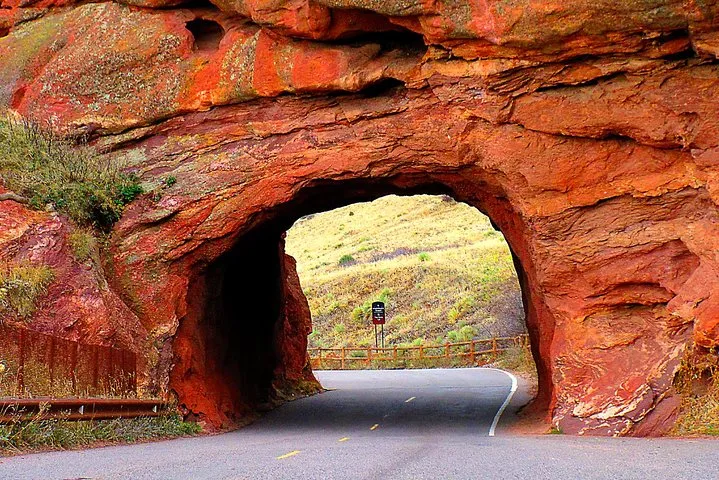
Nearly 800 reviews and a 4.9 average make this the safest bet among the Denver day trips that reach Breckenridge. Same shape as the tour above — Red Rocks, the climb over the Divide, free time on Main Street — with admission and bottled water included. Worth knowing before you book: no children under seven, and the operator states it is not recommended for travellers with spinal injuries or poor cardiovascular health, which is an altitude caution as much as a road one.
- 4.9 average from nearly 800 verified reviews
- Red Rocks Park admission included
- Crosses the Continental Divide above 3,600 m
- Free cancellation up to 24 hours before
Getting Around Once You Are There
The reason so many visitors get away without a car: Breckenridge runs one of the better free transit systems in a US ski town.
Free buses, and where they do not reach
The FreeRide bus network covers the town and the base areas all day at no charge, the Main Street trolley runs the central strip, and the county-wide Summit Stage connects Breckenridge to Frisco, Dillon, Keystone and Copper — also free. Most lodging sits within a short walk of a stop, and many hotels run their own shuttle on top of that.
What the buses do not reach are the trailheads and the working ranches and kennels out in the valleys, which is where the winter activities that are not skiing actually happen. A dog sled tour starts fifteen to twenty minutes outside town up an unpaved road; no scheduled service goes there. For a single trip like that, the options are a taxi, a rideshare from within the resort, or the operator's own transport if they offer it — worth asking when you book.
Which One to Pick
Four traveller types, four different right answers.
By what your trip actually looks like
Skiing for a week, staying in town. Take the shuttle. You will not touch a car for six days, the free buses cover the mountain, and $49 to $129 beats a week of rental plus parking without an argument.
On a budget, arriving midweek, travelling light. Take the train and the Bustang. About $22, three to four hours, and the only real cost is the connection timing. Arriving on a winter weekend? Snowstang goes direct for $12.50 and gets in at 08:00.
A family with kids and gear. Price the door-to-door shuttle against a private transfer before you assume the shuttle wins — at four to six people the private charter often costs less than the seats do, and it goes straight to the lodging.
Doing anything outside town. Rent the car, take the all-wheel drive, and read the traction rules before you pick the cheapest line on the booking page. A dog sled morning, a hot spring, a trailhead, or dinner in Frisco all need one.
Whichever you pick, book the bed before the transport: the where-to-stay comparison sets the areas against each other, and current rates are here.
Denver to Breckenridge: Common Questions
Is it difficult to drive from Denver to Breckenridge?
In clear weather, no: it is 104 miles on one Interstate with a single exit to remember. In winter it is a mountain drive over an 11,158-foot pass where the state can require all-wheel drive or chains at any time, and where visibility can drop to nothing in minutes. If you have never driven in snow at altitude, this is not the trip to learn on — take a shuttle and enjoy the view instead. What the traction law requires.
Is there a shuttle service from Denver Airport to Breckenridge?
Several. Epic Mountain Express, Peak 1 Express, Summit Express, Fresh Tracks and GoSno all run the corridor. Fares start around $49 one way to the Breckenridge transfer centre, or $39 for Epic Pass holders, with door-to-door service to your lodging at $59 to $129. Book in advance — the good arrival slots sell out in ski season. How the shuttles work.
How much would an Uber cost from Denver Airport to Breckenridge?
Uber's own route page estimates about $161 for the 104-mile, 118-minute trip, before surge. The bigger issue is availability rather than price: drivers are not reliably willing to take a four-hour round trip into the mountains, especially late at night or in a storm. Shuttle companies say plainly that rideshare works once you are at the resort but not always from the airport. More on rideshare and private transfers.
How do people get from Denver to Breckenridge without a car?
Three ways. A shared airport shuttle from about $49. The public chain — the $10 RTD A Line train to Union Station, the $12 Bustang coach to Frisco, then the free Summit Stage bus — for roughly $22 in total. Or, on winter weekends, the direct Snowstang coach from Union Station at $12.50, leaving at 06:05 and arriving at 08:00. All the fares side by side.
How long does the drive take in winter?
Plan two to two and a half hours, which is what the shuttle operators themselves plan for, rather than the hour forty-five a map will show you. On a peak Saturday or behind an incident at the Eisenhower Tunnel, three hours and more is routine, and the Interstate closes outright several times each winter. Travel midweek, or against the Friday-westbound and Sunday-eastbound ski flow. Why the two hours become three.
Do I need a car in Breckenridge?
Not for the town. The FreeRide buses and the Main Street trolley are free and cover the town and the ski base areas, and county buses reach Frisco, Dillon and Keystone at no charge. You need a car for what sits outside town — trailheads, hot springs, and the valley roads where the dog sled kennels are, fifteen to twenty minutes out. Getting around without one.
Is Eagle County Airport a better option than Denver?
Sometimes. EGE is an hour closer to Breckenridge and skips the worst of the I-70 corridor, but it has a small fraction of Denver's flights and usually a much higher fare. Price it for a short trip where the saved driving is worth real money; for most itineraries Denver plus a shuttle still wins.